Thursday, March 3, 2011

I downloaded the fallowing public domain books today from Librivox:


The Bobbsey Twins at the Seashore

by Laura Lee Hope

In this third volume of the “Bobbsey Twin Series”, the twins – Nan and Bert and Freddie and Flossie – go with their family to visit relatives at the seashore. Excitement and adventure are sure to abound! (Summary by Maria Therese)

The Mystery of the Yellow Room

by Gaston Leroux (1868-1927)

This crime novel was possibly the first to involve a ‘locked room mystery’, in which an attempted murder takes place, but with no obvious way for the perpetrator to have escaped. The author, Gaston Leroux, is better known as the author of The Phantom of the Opera: prepare to feel the hairs standing up on the back of your neck…
(Summary by Stuart Bell)

Mystery_of_the_Yellow_Room_1102 Thumbnail


The Phantom of the Opera

by Gaston Leroux (1868-1927)
Translated by Alexander Teixeira de Mattos (1865-1921)

Christine Daae was brought up in the Paris Opera house. Her musician father suddenly dies, telling her he will send her an angel of music to look after her. She grows up and discovers that she is hearing a voice, telling her and teaching her to sing. She believes he is the angel of music but he is known in the Opera House simply as The Phantom. Although she is fascinated and drawn towards the phantom, she falls in love with her childhood sweetheart, The Vicomte de Chagny - or Raoul - but the Phantom won't take this lightly... (Summary by Ralph Snelson)


Book Thumbnail

32 Caliber

by Donald McGibney

A suspicious accident reveals itself to be a murder! Our story is narrated by a lawyer who turns detective in order to uncover the real murderer, and leads us on a chase through Bolshevik headquarters, country clubs, and a dry creek bed, before the real clues come to light. Up-in-the-air excitement!

Wednesday, March 2, 2011

I downloaded the fallowing public domain book today from Librivox:

The Gambler

by Katherine Thurston (1875-1911)

Clodagh, 18 years old, is the eldest daughter of Dennis Asshlin, an Irish gentleman who lives in an area of Ireland called Orristown. Dennis is passionate, proud and indebted to no one. But, Dennis has an obsession with gambling that is leading the family to ruin. When tragedy strikes, Clodagh finds herself in a situation where she must defend the family honor because “no Asshlin is ever obliged to anyone”. She marries a man she does not love who is many times her age and is thrust from adolescence to adulthood literally overnight. Clodagh travels to Europe and mingles with people of society and fashion which through her immaturity, she believes is her right. She finds instead uncertainty, despondency, and deceit. Her emotions are constantly in battle with reality as she discovers her society acquaintances are not the “friends” she believes them to be. During her visit to Europe, Clodagh discovers that she too is burdened with the Asshlin curse for gambling which eventually leads to more heartbreak. A chance encounter seems to change her life and she returns to Ireland, only once again to be thwarted by the Asshlin curse. A surprise and tense ending is in store for the listener. (Introduction by Tom Weiss)

Tuesday, March 1, 2011

I downloaded the fallowing public domain books today from Librivox:

I Say No

by Wilkie Collins (1824-1889)

Emily Brown is an orphan girl that almost no one can help but love when they meet her. She is pursued by two worthy men: Mr. Alban Morris, the drawing master at her school; and Rev. Miles Mirabel, a clergyman. However, one of them is lying to her after she discovers that her father's death wasn't natural, as she was led to believe. (Introduction by TriciaG)

The Masquerader

by Katherine Thurston (1875-1911)

The Masquerader is one of two Katherine Cecil Thurston’s books that appeared on the Publisher’s Weekly best-seekers list in 1905 (The other, The Gambler, is also in the Librivox collection). The Masquerader is part mystery, part romance and part political thriller – all tied up in one neat package. Nature has a way of sometimes making two people nearly indistinguishable in appearance. Such is the premise for this book. John Chilcote, a British politician, and John Loder, a man down on his luck meet by accident one night during one of London’s worst fogs. Chilcote, addicted to morphine, needs to escape his political responsibilities and presents an offer to Loder to exchange places occasionally. Loder, reluctant at first, finally accepts the proposal and finds he fits into Chilcote’s role – perhaps better than Chilcote himself. The exchanges become more frequent and lengthy. Loder, finding his way, discovers he is worthy of Chilcote’s position, especially during an international crisis, but when Chilcote reclaims his life, Loder’s accomplishments try to unravel. Two women are intimately involved in this story – one is Chilcote’s wife, Eve, who is a wife of convenience rather than love. The second is Lady Astrupp. We will say little about Lady Astrupp except that she adds a great deal of suspense to the story. In such a charade, things do not always go as expected. Does Chilcote break his drug habit? What becomes of Loder? Does Eve become suspicious as a wife might? Is the masquerade exposed by……but then I would be telling you more than you should know beforehand.(Summary by Tom Weiss)

Monday, February 28, 2011

Some of the books I have recently listened to are:


Run away home / (audiorecording). Jennie Hansen.
by Hansen, Jennie L.


Summary:
A young woman whose family background has left her emotionally scarred and fiercely independent finds herself trapped in a mountain cabin with the only man in her life who has shown her true affection but whom she cannot trust.


Wild card : a novel / [sound recording] by Jennie Hansen; narrated by David Walker.
by Hansen, Jennie L., 1943-

Summary:
Frank's story is one of misunderstandings, betrayals, heartaches and deadly secrets. It is a timeless tale of the struggle between good and evil, and of one man's journey to find himself - and God.

Silas Marner

by George Eliot (1819-1880)

Silas Marner (originally published in 1861): Betrayed by a beloved friend and accused of a crime he didn’t commit, awkward Silas Marner is expelled from his beloved religious community — the only community he has ever known. He exiles himself in the remote village of Raveloe. Friendless and without family, set apart from the villagers by their superstition and fear of him, he plies his weaving trade day after day, storing up gold which becomes his idol. When his gold is stolen, he is rescued from despair by the arrival on his lonely hearth of a beautiful little girl, whom he adopts, and through whom he and the other people of the village learn that loving relationships are more fulfilling than material wealth. (Summary by rachelellen)

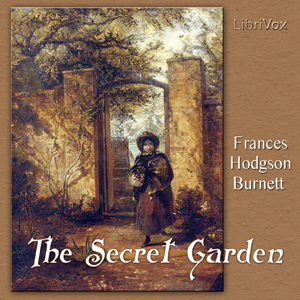
The Secret Garden

by Frances Hodgson Burnett (1849-1924)

Mary Lennox is a spoiled, middle-class, self-centred child who has been recently orphaned. She is accepted into the quiet and remote country house of an uncle, who has almost completely withdrawn into himself after the death of his wife. Mary gradually becomes drawn into the hidden side of the house: why does she hear the crying of a unseen child? Why is there an overgrown, walled garden, its door long locked? (Summary by Peter)

Cutting edge: (sound recording). a novel / Jeffrey S. Savage

Summary:
When Travis Edwards discovers someone has been stealing sensitive files off of his computer and the person he confides in mysteriously disappears, he must use all the means at his disposal to prove his innocence and keep his family alive.


High stakes / (audiorecording) Jennie Hansen; read by David Walker.

Summary:
When Maddie Brannigan's gambler father offers his daughter as his stake in a game of chance, she runs away - only to fall in love with a man being pursued by bounty hunters.


Macady / (audiorecording). Jennie Hansen; narrated by Kathryn Little.

Summary:
When Macady Jackson accidentally becomes involved in a drug undercover investigation, Deputy Aaron Westerman desperately tries to locate the drug ring before they try to keep Macady from identifying them.

Tuesday, February 15, 2011

I'd like to write a "Sonnet
Or a song to you, my Love,
With words that rhyme and
keep in time
Like love and turtle dove.

And when I look at you,
Think what you mean to me,
The words and song reach out
To be presented for the world
to see.

Faltering words and stillborn
song try to testify
The sonnet there within my heart
The song within my soul.
Is the message in my eyes,
My love, my joy forever,
Telling how I love you so?

Anne gave this to me many years ago. She thinks it is too good for her to claim. Recognize it?

Monday, February 14, 2011

As a valentines gift I recieved a DVD entitled "A Celebration of Family History. I also received an Audio book. Perhaps watching the DVD was life changing--we shall see.

Saturday, December 11, 2010

A Christmas Dress For Ellen

That December her heart was so full of sorrow and concern for her six small children that she felt it would surely break. On Christmas Eve, all her children, except the oldest, Ellen, 10, were dancing around, excited to hang their stockings for Santa to come. Mary helped each one of her children hang a little darned and mended stocking, but she couldn't persuade Ellen to participate. Of all the children, Ellen alone knew there was nothing with which to fill the stockings.

Then the young mother sat by the fire, thinking of her plight. Spring had come very late and winter had come very early for the last two years, causing the crops to freeze and fail.

In October Mary had received a letter from her sisters living in Idaho who, despite their own setbacks, had asked what they could send her family for Christmas.

In November, in desperation, Mary had written.

Mary had requested only necessities. She told them how desperately the family needed food, especially wheat, yeast, flour and some cornmeal. She also asked for some old, used quilts and for some worn-out pants to cut up and use to patch her sons' clothes, and mentioned the family's desperate need for socks, shoes, gloves, hats and coats.

Then finally, Mary asked if someone might have a dress she had outgrown to send to Ellen, who only had one dress that was patched and faded. Mary felt she could fix up such a dress and thus bring some joy to Ellen, who had too much to worry about for a 10-year-old.

The week before Christmas Mary's husband, Leland, made a daily three-hour round trip into the town of Cardston to check at the train station and the post office for a package from Idaho. Nothing came.

Then at 3:30 on Christmas morning, while her husband and children slept, Mary heard a knock at the door. It was the mailman, a member of the Church from Cardston, telling Mary 10 large crates from the States had arrived for the Jeppson family. He knew they had been waiting for the packages and that there would be no Christmas without them. With horse and sleigh, he set out from his home Christmas Eve and traveled eight hours in a severe snowstorm to deliver the crates to the Jeppsons' isolated farm house.

Mary had thanked him all she could, but she always said that there just were not words enough to express her thanks. After all, how do you thank a miracle, and a Christmas miracle at that?''

Inside the boxes was a note from Mary's sisters. They told her that quilting bees had been held all over the Malad Valley, and from these, six thick, warm beautiful quilts had been made for them. They also told of the many women who had sewn shirts for the boys and dresses for the girls, and of others who had knitted warm gloves and hats.

The donation of socks and shoes had come from people for miles around. The Relief Society had held a bazaar to raise the money to buy the coats, and all of Mary Jeppson's sisters, nieces, cousins, aunts and uncles in Idaho had gotten together to bake the breads and make the candy to send.

There was even a crate half full of beef that had been cured and packed so that it could be shipped along with two or three slabs of bacon and two hams.

The letter closed with these words: “We hope you have a Merry Christmas, and thank you so much for making our Christmas the best one we've ever had!”

Mary's children awoke that morning to bacon, hot muffins and jars of jams and jellies and canned fruit. Every stocking that was hanging was stuffed full of homemade taffy, fudge, divinity and dried fruit of every kind.

The most wonderful miracle, though, occurred when Ellen, the very last to get up . . . looked to where her stocking was supposed to have been hung the night before and saw hanging there a beautiful red Christmas dress, trimmed with white and green satin ribbons. She later said it was the most wonderful Christmas morning ever.

“That morning,'' concluded President Monson, “with the Christmas dress for Ellen, a childhood had been brought back, a childhood of hopes and dreams and Santas and the miracle of Christmas.''

“If there is one common denominator, perhaps it is this: Christmas is love. Christmas is the time when the bonds of family love transcend distance and inconvenience,'' said President Monson. “It is a time when love of neighbor rises above petty day-to-day irritations, and doors swing open to give and receive expressions of appreciation and affection.”

(This is the true story of a young mother, Mary Jeppson, who lived in the remote prairie town of Hillspring, Alberta, and how she celebrated Christmas in 1927 as told by President Thomas S. Monson during the First Presidency Christmas Devotional in the Tabernacle Dec. 7, and reported in the Deseret News, 13 Dec 1997)